| Elizabeth R | 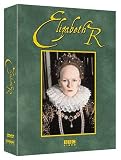
 enlarge enlarge | List Price: $69.98
Buy New: $46.99
You Save: $22.99 (33%)
Buy New/Used from $46.99
Avg. Customer Rating:   (based on 99 reviews) (based on 99 reviews)
Sales Rank: 10537
Category: DVD
Actors: Glenda Jackson, Ronald Hines, Stephen Murray, Robert Hardy, Angela Thorne
Publisher: BBC Warner
Studio: BBC Warner
Brand: Warner Brothers
Label: BBC Warner
Format: Box Set, Color, Closed-captioned, Ntsc
Language: English (Original Language)
Rating: NR (Not Rated)
Media: DVD
Running Time: 540 minutes
Number Of Items: 4
Aspect Ratio: 1.33:1
Shipping Weight (lbs): 0.7
Dimensions (in): 7.3 x 5.5 x 1
MPN: WARDE1588D
ISBN: 0790761939
UPC: 794051158826
EAN: 9780790761930
ASIN: B00005LC1D
Release Date: October 16, 2001
Theatrical Release Date: February 13, 1972
Shipping: Eligible for Super Saver Shipping
Availability: Usually ships in 24 hours
|
| Customer Reviews:
 It's good TV but it's only TV January 23, 2009 It's good TV but it's only TV January 23, 2009
0 out of 5 found this review helpful
It's good TV but it's only TV, and the best of TV is still not as good as a book or a movie, so don't buy this with hopes of anything worth your time.
It's good TV because they did tons of research to make the scenes accurate. So you could learn by watching it. But if you want to learn, you would do better to get a book. You could get 100 times as much information, plus analysis, and besides you wouldn't have to endure the annoying interludes of flute music!
It's good TV because they tried to tell a long coherent story instead of the usual 19 minutes of low-attention-span garbage. But if you want a coherent story, you would do better to see a movie. This is because movies have Directors. They deal with camera angles, cinematography, and pace. TV producers don't have time for that sort of subtlety, so they just stick a bunch of actors in front of a camera and go through scene.. after scene.. after scene.. after scene. Where a well-directed movie has a sense of increasing or decreasing tension, plot, or resolution, a miniseries just goes on .. and on .. and on.
As multiple reviewers point out, the production values are appalling: cheap sets badly lit, interspersed with long-range blurry shots of somebody-on-a-horse. I don't really care: if they had good acting or writing, it would be fine. Monty Python's Flying Circus was filmed with the same sort of budget, and it's great stuff. (Actually one distraction with the Elizabeth series is the constant suspicion that at any moment they are about to burst into the Lumberjack Song).
As for acting - - The character of Mary in the first instalment was impressive. The rest of them are just a bunch of people standing around reading lines. When Mary shows up and really looks like a person with inner life and emotions, it is a remarkable contrast. Many reviewers have commented that Glenda Jackson's acting seems "too stern". Actually she has three modes.
1.Act stern
2.Suddenly burst into maniacal laughter
3.Suddenly shout at people, thus showing your Awesome Personal Power
No character, though - just three modes. Most college drama club actors could do it. And maybe yall look down your noses at the Cate Blanchett version, but Cate showed more character and presence in the first three seconds where the camera slowly brings her into focus, than Glenda manages in hour after dreary hour.
No review would be complete without mentioning the poor writing of episode 1. It opens with five minutes of completely indecipherable reference to the nobleman who kept visiting the adolescent Elizabeth in her bedroom. I forget his name - the one who ended up with his head chopped off? Anyway, maybe British kids are all brought up knowing all this stuff by heart, so all you have to do is show a guy acting foppish and a girl in a nightgown, and everybody knows the rest of the story. But if you didn't know the story, you would be completely unable to figure out what the heck they were talking about. The rest of episode 1 has the same defect. If you don't know the lives of Edward, Mary, and Elizabeth, and their various mothers, you will never learn it from the incoherent and hasty scenes that litter the entire episode. And that is a key indicator of bad writing. Even if you do already know the whole history, bad writing is still bad writing.
Elizabeth R January 18, 2009
Loved this DVD set. The quality wasn't the greatest, but that was to be expected from such old film I suppose. I love Glenda Jackson as Elizabeth. Her portrayal is very like the image I had in my head from reading Rosalind Miles' "I, Elizabeth". Will be interesting to see how that book will change for me the next time I read it, now that I've seen Elizabeth R.
 The Standard for Queenship December 30, 2008 The Standard for Queenship December 30, 2008
1 out of 1 found this review helpful
The "Elizabeth R." series was completed well before my time (in fact, my mother was just in her second year of college when it came out!), but I've always enjoyed a good Elizabethan drama, so I figured this would be a wonderful addition to my collection.
Having completed all 6 episodes, I can say without equivocation that Glenda Jackson's 'Good Queen Bess' is THE standard to which all others will be compared. I truly thought Helen Mirren's light and shade performance in HBO's "Elizabeth" was clearly the best representation, until I saw Ms. Jackson's characterization. Her thunderous "God's death!" puts a smile on my face because I imagine that is how QEI would've sounded.
On the basis of the acting (heck, just Glenda Jackson alone), this deserves the 5-star treatment, but I do take issue with the lack of respect this venerable series has gotten from Masterpiece Theater and the BBC. The lighting, the noticeable differences between video and film (the shots inside versus the shots outside), and in particular the sets, all leave much to be desired. I understand the workings of a shoestring budget in the 70's, but restoration would at least enhance the color and texture. The very same BBC did it for "The Six Wives of Henry VIII," so it stands to reason that it could be done for "Elizabeth R."
Based upon Glenda Jackson, fine costuming (the attention to detail was very fine), a strong supporting cast, I give it 5-stars, but due to limited technology, poor lighting and sets, I must take away a star. This is a must have for any history buff, no matter what time period you study.
"Good Sir, if you value your life, go not to the first man, but to the first woman in this kingdom." October 4, 2008
3 out of 3 found this review helpful
Glenda Jackson gives the performance of her life as the Virgin Queen. Far superior than any big screen treatment devoted to the life of Elizabeth I, this excellent British mini-series is at once historically accurate and highly entertaining. Costumes are spectacular and sets authentic-looking, but it is the superb writing (much of it culled from the historical record) and inspired acting that conspire to bring the past vividly to life. The Tudor Court supplies an endless stream of plot-twists: factions, rebellions, rivalries, tortures, beheadings, murders, suicides, romances, diplomacy, treachery, war--you name it. An hour and a half in length, each episode is a movie unto itself. My one complaint is that the French are caricatured, and Catholics are portrayed as effeminate, mad, or downright evil.
Episode One begins near the end of the reign of Elizabeth's half-brother, Edward VI, who came to the throne when he was only nine and died at age fifteen. Since Edward was Henry VIII's only male heir, the order of succession devolves to Henry's two daughters, Mary (Daphne Slater, in a spectacularly wicked performance) and Elizabeth. This first episode centers on the conflict between these royal sisters. Some back story is needed to appreciate their rivalry: Henry had divorced Mary's Spanish-Catholic mother, Queen Katherine of Aragon, in order to wed the nubile Anne Boleyn. But Anne, like Katherine, only gave Henry a daughter, so he had her executed and married Jane Seymour, who finally gave him a son (Edward). Mary blames Elizabeth's mother for Katherine's suffering when Katherine was cast aside by Henry. Mary also believes that Boleyn was a "strumpet" and witch who cast a spell on--and effectively killed--Katherine, whose autopsy revealed a mysterious, black lump in her heart. Yet, despite all this blood under the bridge, Mary can't help feeling sisterly affection for Elizabeth, with whom she played when young. After the failure of Wyatt's rebellion, however, which was undertaken to place Elizabeth on the throne, Mary consigns her to the Tower, last stop for Anne Boleyn before she was executed. Death, it turns out, lurks everywhere when you are heir to a throne (or bride to a King). Yet Elizabeth, through her sharp survival instincts and keen intelligence (and help from faithful followers), manages to survive. Eventually, Mary marries Prince Philip of Spain. But Philip, disgusted by the sickly, overbearing Mary, falls in love with Elizabeth instead. Mary dies without an heir, Philip goes back to Spain, and Elizabeth is proclaimed Queen.
Episode Two finds the lusty, young Queen pressured by her Privy Council to marry. She's being courted by the King of Spain and, it seems, every prince in Christendom. But Elizabeth has eyes only for Robert Dudley, her childhood friend, who is already married. Meanwhile, Elizabeth proves to be an able monarch, in no need of a husband. Were she to marry, her husband would become de facto ruler, just as Philip had ruled over Mary. To her Council's chagrin, Elizabeth has no intention of giving up her power. When Dudley's wife commits suicide, the rumor is that he killed her to wed Elizabeth. But Elizabeth insists she will marry no one. Calamity strikes again when the whole kingdom is thrown into uncertainty as the Queen contracts smallpox and almost dies without an heir. After her recovery, the pressure to wed grows more intense. "I will have no master," Elizabeth declares, recalling how her stepmother, Katherine Howard, ran screaming through the galleries of the castle pleading for her life when Henry VIII ordered her head cut off. Elizabeth, who associates marriage with death, will not put herself in that situation, not even for Dudley, whom she dearly loves. Unmarried, she is absolute Monarch, both King and Queen.
Nevertheless, Episode Three finds Elizabeth coming close to marrying. For a virgin, she proves an insatiable flirt. Her main suitor is Francis, the Duke of Alencon. Ironically, her Council cannot give their blessing since the people of England oppose the marriage because of the Duke's Catholicism. Moreover, a marriage alliance with France means a quarrel with Spain, which Elizabeth wishes to avoid. In any case, when Elizabeth finds out that Robin has remarried, her jealous wrath shows where her true love lies. Her engagement to Francis is called off.
Episode Four centers around Mary, Queen of Scots, Elizabeth's cousin, and next in line to the English throne. Mary (Vivian Pickles, in a magisterial performance, particularly at her beheading) has been put under house arrest by Elizabeth, who fears that Catholics will depose her in favor of Mary. Elizabeth refuses to execute Mary, despite urgent warnings from her advisors. But when Elizabeth receives omens of death from the astrologer John Dee, her fear of being deposed nudges her in that direction. When Elizabeth's spymaster, Walsingham, sets a trap for Mary, the latter incriminates herself by getting involved in Babington's plot to kill Elizabeth. Even so, Elizabeth is still reluctant to dispatch her cousin to the next world. When Mary is finally beheaded through Walsingham's machinations, Elizabeth screams bloody murder and denies any involvement. This episode is particularly dark, laying bare the barbarity--the most horrible cruelties and sadistic tortures--to which people descend over matters of religion and state. As Mary exclaims, "What great sins are committed in the name of duty!"
Episode Five again turns to Philip of Spain, who, as Mary's husband, had once been King of England. Now quite old, he is being pressured by Catholic Europe to war against England, despite the old man's reluctance to battle Elizabeth, whom he once loved ("that remarkable woman," he calls her). But, before her death, Mary, next in line as monarch, bequeathed the English throne to Spain, giving Philip, as he sees it, a legal claim, especially since Catholic Europe considers Elizabeth a bastard (Henry's divorce from Katherine of Aragon wasn't recognized by the Vatican). When the British pirate Francis Drake continues to plunder Spanish ships and ports, Philip, in ill health and believing that England's Catholics long to be liberated, finally decides to sail against Britain, albeit despite his better judgment (his father had warned him never to lose England's friendship). The enterprise, thanks in part to the "Protestant wind" that blows against the Armada, proves a fiasco for Philip and marks the beginning of the end of Spain's dominion over Europe.
"To be a king and wear a crown is a thing more glorious to them that see it than it is pleasant to them that bear it." In the concluding episode, Elizabeth dotes on the brash, young Essex (Dudley's step-son). After their defeat at sea, the Spanish take to funding the Irish, against which the British are mired in costly campaigns. To Ireland Elizabeth sends the increasingly insolent Essex, whose ambition soon turns to arrogance. Suffering humiliation in Ireland, and feeling himself to be slighted by Elizabeth, Essex, despite her wish for him to remain in Dublin, returns to London full of hubris and bravado. Making a secret alliance with King James of Scotland, Essex launches a coup against Elizabeth. It fails, and Essex is executed. Elizabeth's last days are spent in addressing the grievances of Parliament regarding monopolies awarded to courtiers (this sets the stage for her so-called Golden Speech to Parliament, movingly delivered by the incomparable Jackson), and in being hectored by her people to determe an heir to the throne. Will it go to Spain, to whom Mary bequeathed it before she died, or to Mary's rebellious son, James? Elizabeth's answer is inconclusive (but, as we know from history, the crown devolved, naturally, to Elizabeth's next of kin, James). If you like history, or just good writing and acting, don't miss this wonderful series. Glenda Jackson IS Elizabeth.
Great Show August 3, 2008
1 out of 1 found this review helpful
First show I remember of Elizabeth I. Captured my interest as a child. I know it seems "old" compared to whats out today, but it is a great production.
|
|
|
