| The Gigolo | 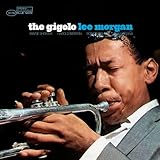
 enlarge enlarge | List Price: $11.98
Buy New: $7.23
You Save: $4.75 (40%)
Buy New/Used from $6.99
Avg. Customer Rating:   (based on 11 reviews) (based on 11 reviews)
Sales Rank: 62438
Category: Music
Artist: Lee Morgan
Publisher: Blue Note Records
Studio: Blue Note Records
Manufacturer: Blue Note Records
Label: Blue Note Records
Format: Original Recording Remastered
Media: Audio CD
Discs: 1
Shipping Weight (lbs): 0.2
Dimensions (in): 5.6 x 5 x 0.5
MPN: 37762
UPC: 946337762276
EAN: 0094633776227
ASIN: B000E1IGBU
Release Date: February 7, 2006
Availability: Usually ships in 1-2 business days
|
| Tracks:
| • | Yes I Can, No You Can't | | • | Trapped | | • | Speedball | | • | The Gigolo | | • | You Go To My Head | | • | The Gigolo (Alternate take) |
|
| Similar Items:
|
| Customer Reviews: Read 6 more reviews...
 Great work, Lee. July 24, 2008 Great work, Lee. July 24, 2008
2 out of 2 found this review helpful
A trumpeter friend of mine recommended this album with Cornbread when I asked him for two Lee Morgan recommendations. After listening to Lee Morgan's work at 19 on Coltrane's Blue Train album, I have been a big fan. Every track on The Gigolo is solid. I highly recommend it.
 Terrible Remaster.... October 5, 2007 Terrible Remaster.... October 5, 2007
2 out of 4 found this review helpful
This is fantastic jazz - Lee Morgan's finest, but it's been ruined by an appalling remastering job. So much treble has been added that his trumpet is rendered as a shrill blast likely to loosen your fillings. If you're getting older, you may find that a diminishing of your high-end hearing ability makes it acceptable. For those with normal hearing, I suggest seeking out an earlier version.
Such great music really deserves better.
Going Past the Cheese, Gettin' to the Core July 30, 2007
7 out of 7 found this review helpful
As much as I love "the procrastinator", "cornbread", and "the sidewinder", this is the definative Lee Morgan album for me. As with all post-sidewinder albums the knock on this one by the jazz-police (the great defenders of cliche and self-important snobbery) is the sidewinderesque first track: "Yes I can, No you can't". For people who can look past labels (and the head of the tune) what you'll find with this track is something very similar to Hank Mobley's "Dippin'", namely a very soulful, very engaging, slice of jazz-funk, done as only Lee Morgan could do it. However the person who makes this album a classic isn't so much the usual suspect of excellence: Wayne Shorter and his brilliant compositional skills and jagged tenor, but rather the pure-hot-fire drumming of Billy Higgins. I think a pretty good case could be made that no one in the history of jazz was a player in more quality recorded sessions than Higgins, one of the two or three greatest ever drummers in jazz. This is a man who could truely do it all, from the high speed Tony Williams like drumming on this album, to, fast forward forty years, his verging on languid, anticipating-improv with Charles Lloyd. Billy Higgins kept the fire burning for a long time, and under many different jazz-pots, but with this album we get Higgins at his most vital, his most alive and immediate. We also get Lee Morgan at his most engaged, no hint here of some of the going-through-the-motions-tiredness of some sideman sessions, or the hesitant tone of late sixties post-swimming accident Lee. This is Lee reaching into his bag of tricks and shooting them all out of his shining horn. He even throws in a ballad just to show that he can. In short this is an album for people who can see past the cheese of the title, the tired criticisms of the self-superior, and who can deal with an album on its own terms. If you can do that what you'll find is a master on the trumpet doing what he does best. And that is a thing to behold.
as good as "The Sidewinder" February 10, 2007
1 out of 2 found this review helpful
Lee Morgan (1938-1972) recorded this album in 1965 at Rudy Van Gelder Studio in Englewood Cliffs, New Jersey on June 25 and July 1. Transferred at a 24-bit resolution from analog to digital, this 2005 Rudy Van Gelder remaster is the best version of Morgan's classic album money can buy. Accompanying Morgan's trumpeting are the following sidemen: Wayne Shorter (tenor sax), Harold Mabern, Jr. (piano), Bob Cranshaw (bass) and Billy Higgins (drums).
Next to Morgan's "The Sidewinder" of 1963, "The Gigolo" is often considered the leader's second best ever album. "Yes I Can, No You Can't" features some raucous solo work by Morgan and Shorter reminiscent of "The Sidewinder". "Speedball" is an instant classic with its fiery and flashy trumpeting, and Higgins plays like a resolute locomotive. The title track, "The Gigolo", is easily the best track on these recordings. Every musician gets a chance to shine on the piece.
This is music from one of hard-bop's premier artists, as significant compositionally as anything put out by Davis or Coltrane in their prime. As I referred to in the opening paragraph, this album has been masterfully restored and sounds better than ever. This album need not be restored again, minus a breakthrough in how we listen to music moves us away from compact discs and digital technology sometime soon. You can purchase this edition of Morgan's classic with absolute confidence.
Ups and downs January 30, 2007
4 out of 6 found this review helpful
If you're a fan of "Sidewinder," this date shouldn't disappoint. On the other hand, "Yes I Can, No You Can't," which is the "Sidewinder"-sequel contender on this date, fails to catch the rocking-dancing rhythm of the original. Morgan simply overplays, perhaps because of the presence of Shorter, who takes the first, overly dramatic solo. "Sidewinder" became such a commercial success because the gifted trumpeter was content to play it coy and conservative, remaining in the middle register and doing little more than "riding the groove."
Morgan is at his best on a live date like "Art Blakey at the Jazz Corner of the World" (especially his once-in-a-lifetime solo on "Justice") and his own "Cornbread" (not even Horace Silver has topped "Ceora"). I never cared for "Sidewinder" when I first heard it, and "Yes I Can" is scarcely an improvement--inspired solo work by both Morgan and Shorter undermined by juvenile, period-piece material. But give the trumpeter credit for establishing a formula that, for a while at least, helped keep little Blue Note records afloat before corporate giant EMI rescued and revived the label. (I've lost track of the Blue Note post-Sidewinder dates opening with the same tiresome formula, among which only Kenny Dorham's "Una Mas" continues to hold interest.)
For serious listening, "Speedball" is the highlight of this date, though "You Go to My Head" receives a welcome facelift and a tasteful Morgan solo by the maturing trumpeter (five years earlier, he would have double-timed it and played it an octave higher). He may still exhibit the playfulness of a gigolo, but there are signs that, had his past not cruelly prevented it, he was ready to settle down.
If you pick this one up, look for a previous edition. This new RVG remaster is particularly annoying because of the boosted treble and bass which, especially with the overplaying, adds up to much sonic ado about nothing.
|
|
|
